The Short Answer
Belonging comes from shared reference points, not from programming volume. One event that an entire class experiences together does more for community than a dozen small events that split the population into fragments.
That is why a single packed auditorium in week two can outperform an entire semester of well-intentioned programming that nobody attended together.
I am Randy Andrews, a nationwide comedy hypnotist, comedy mentalist, and keynote speaker performing for colleges and universities, corporate events, and high schools across the country. Across more than 1,500 live shows I have watched a room of strangers become a room of people with a shared story, usually in under an hour. Here is the mechanism, and how to use it deliberately.
Why Belonging Is a Retention Question
You already know this from your own institutional data, so I will not oversell it.
Students who form a genuine connection early are far more likely to persist. Students who reach October without one are the students your retention team ends up calling in November.
What matters for programming is how those connections form. They do not form because a student attended an event. They form because a student had a conversation, and conversations need material.
Programming does not create friendships. Programming creates the raw material friendships are made from.
The Shared Reference Point
Think about what makes a class feel like a class rather than a collection of individuals. It is almost always a handful of things everybody was present for.
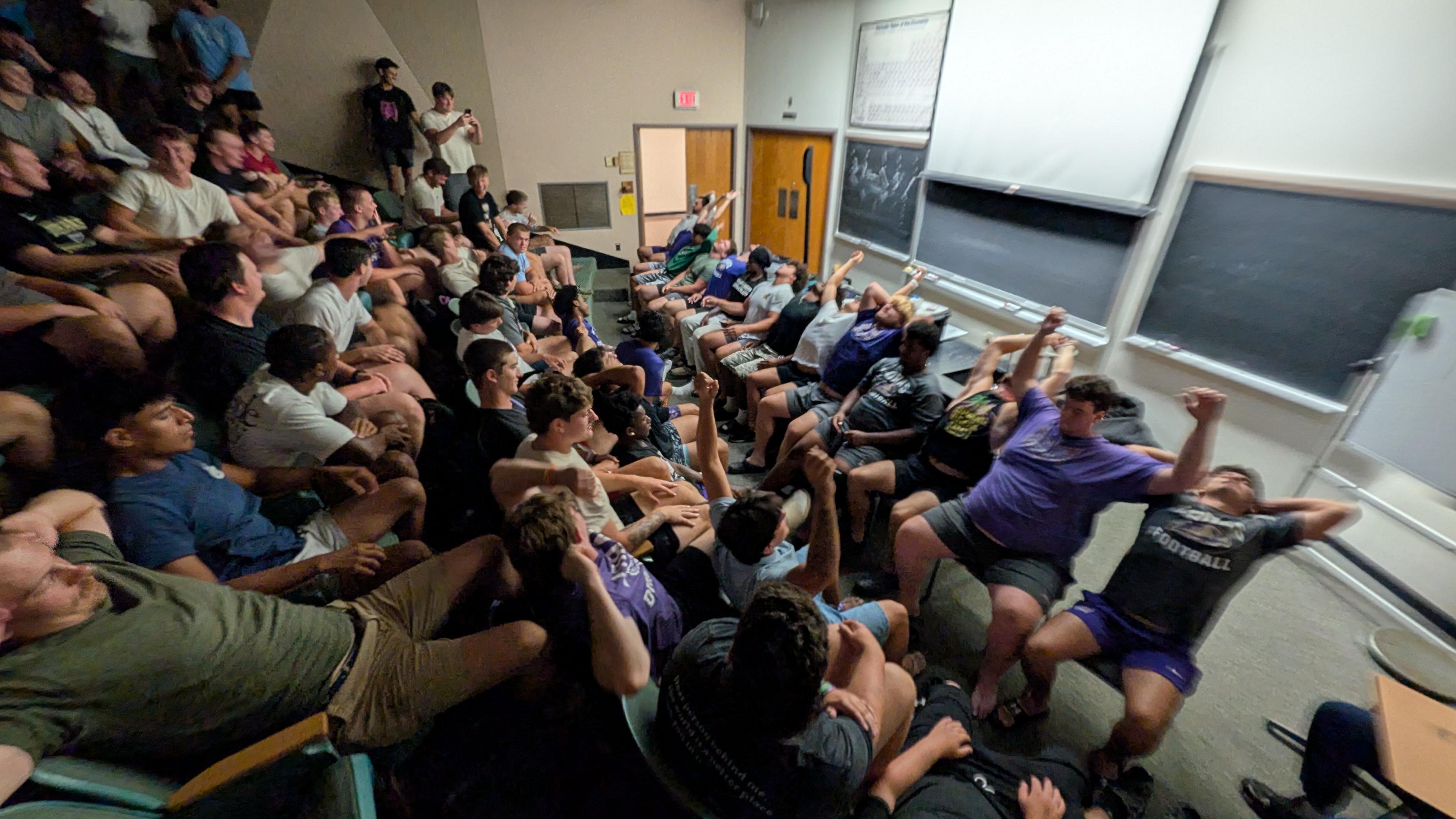
The snowstorm. The power outage during finals. The night the hypnotist had half the freshman class on stage.
Those references do a specific piece of work. They let a student walk up to a stranger and start talking with zero social risk, because they already have something in common that neither of them has to disclose anything to access.
Campus community forms around shared reference points that large portions of a student population experience simultaneously. These shared experiences give students low-risk conversation openers with people they do not know, which is the mechanism by which programming supports connection. A single high-attendance event typically produces more of this effect than several smaller concurrent programs.
Why One Big Event Beats Six Small Ones
This runs against how most programming calendars get built, so let me make the case plainly.
Six events with 80 students each gives you 480 attendances and six separate small groups. One event with 480 students gives you the same attendance number and one shared reference the whole population can access.
The second version is worth far more for community, and it costs roughly the same or less to produce.
There is a real place for small interest-based programming, and it does important work for students who already know what they are looking for. What it cannot do is give an entire incoming class something in common in week two.
What Interactive Specifically Adds
A concert or a film screening creates a shared reference. An interactive show creates a shared reference plus a roster of newly recognizable students, and that second part is where the community effect really lives.
Here is what happens after an interactive show on a campus:
- •Volunteers become known. Fifteen to twenty students are suddenly recognizable to hundreds of peers. For a first-year student, that is transformative.
- •Recognition spreads outward. Their roommates, floor mates, and classmates get reflected visibility from being adjacent to it.
- •The story keeps traveling. Students who attended tell students who did not, which extends the reference beyond the room.
- •It resurfaces all year. "You were the guy from the show" is a conversation opener that works in November.
That is the difference between an event students watched and an event students were in. Both are good. Only one of them makes twenty strangers into campus figures overnight.
For Residence Life
Your specific challenge is that floor communities either gel in the first three weeks or they do not gel at all.
Two things that help:
- •Bring floors together, not individuals. Have RAs walk their floor over as a group. Students who arrive together sit together, and students who sit together talk afterward.
- •Debrief informally the same night. Not a structured reflection. Just an RA in the lounge with snacks at 10:30 saying "okay, that was something." The conversation does the work on its own.
That second one costs nothing and roughly doubles what you get out of the event.
For Student Affairs and Student Government
If you are trying to build institutional culture rather than fill a calendar, the useful question is not how many events you ran. It is what percentage of your student population shares at least one common experience.
That is a different metric and it produces different decisions. It pushes you toward fewer, larger, better-promoted events, and toward measuring reach rather than event count.
It also gives you a much stronger story at budget time than a list of activities held.
Student affairs programming is more usefully measured by the percentage of the student population sharing at least one common experience than by total event count. This metric favors fewer, larger, well-promoted events over frequent small programming, and better reflects the conditions under which campus community actually forms.
Measuring It Honestly
I am not going to hand you a statistic about retention lift, because any number I quoted would be borrowed from a context that is not yours. What I can give you is what to track so you generate your own.
- •Reach percentage. Attendance divided by eligible population, not raw attendance.
- •Repeat attendance. How many students who came to the anchor event came to the next thing. This is your real engagement signal.
- •One survey item at 30 days. "I have made at least one friend I expect to keep." Simple, and it moves.
- •Persistence comparison. Attendees versus non-attendees at the census date. Your institutional research office can run it.
Track those for two years and you will have something far more persuasive than anything a performer could tell you.
Frequently Asked Questions
How do you build community on a college campus?
Create shared reference points that large portions of the student population experience at the same time, then give students low-pressure settings to talk about them afterward. Community forms through conversation, and conversation requires common material that students can access without disclosing anything personal.
What student engagement ideas work best for first-year students?
High-attendance interactive events in the first three weeks work best, particularly ones featuring students themselves. Bringing residence hall floors as intact groups rather than as individuals substantially increases the connection effect, since students who arrive together tend to stay together afterward.
Is it better to run many small events or a few large ones?
For building campus-wide community, fewer and larger works better. Six events of eighty students produce six small groups, while one event of 480 students produces a reference the entire population can access. Small interest-based programming still matters, but it serves a different purpose.
How do interactive shows help with student retention?
They create early social connections, which correlate strongly with persistence at most institutions. Interactive formats add a second effect by making student volunteers recognizable to hundreds of peers, which accelerates social integration for those students and the people around them. Institutions should measure this against their own data.
What should residence life do around a large campus event?
Walk floors over as groups rather than promoting to individuals, then hold an informal gathering in the lounge the same night. The unstructured conversation afterward does more community work than the event alone, and costs nothing.
How do we know if campus programming is working?
Track reach as a percentage of eligible population rather than raw attendance, measure repeat attendance at the next event, and add a single friendship survey item at 30 days. Program formats and requirements are covered on the FAQ page.
Give Your Campus Something in Common
Every institution wants students to feel like they belong somewhere. The practical version of that is making sure enough of them were in the same room for the same thing early enough to matter. Campus programs are detailed on my colleges and universities page, the show format is on the comedy hypnosis show page, and student affairs teams describe the results on my reviews and past clients page.
Check availability for your campus and I will send you a custom quote plus a recommendation on timing it for maximum reach.
Check AvailabilityBased in Iowa and performing nationwide across 40+ states, Randy Andrews delivers comedy hypnosis, comedy mentalism, and keynote speaking for corporate events, colleges, high schools, and fundraisers. Find your city or region and see what planners in your market say about the show.