There is a specific look a football team gives an entertainer when he walks into their meeting space.
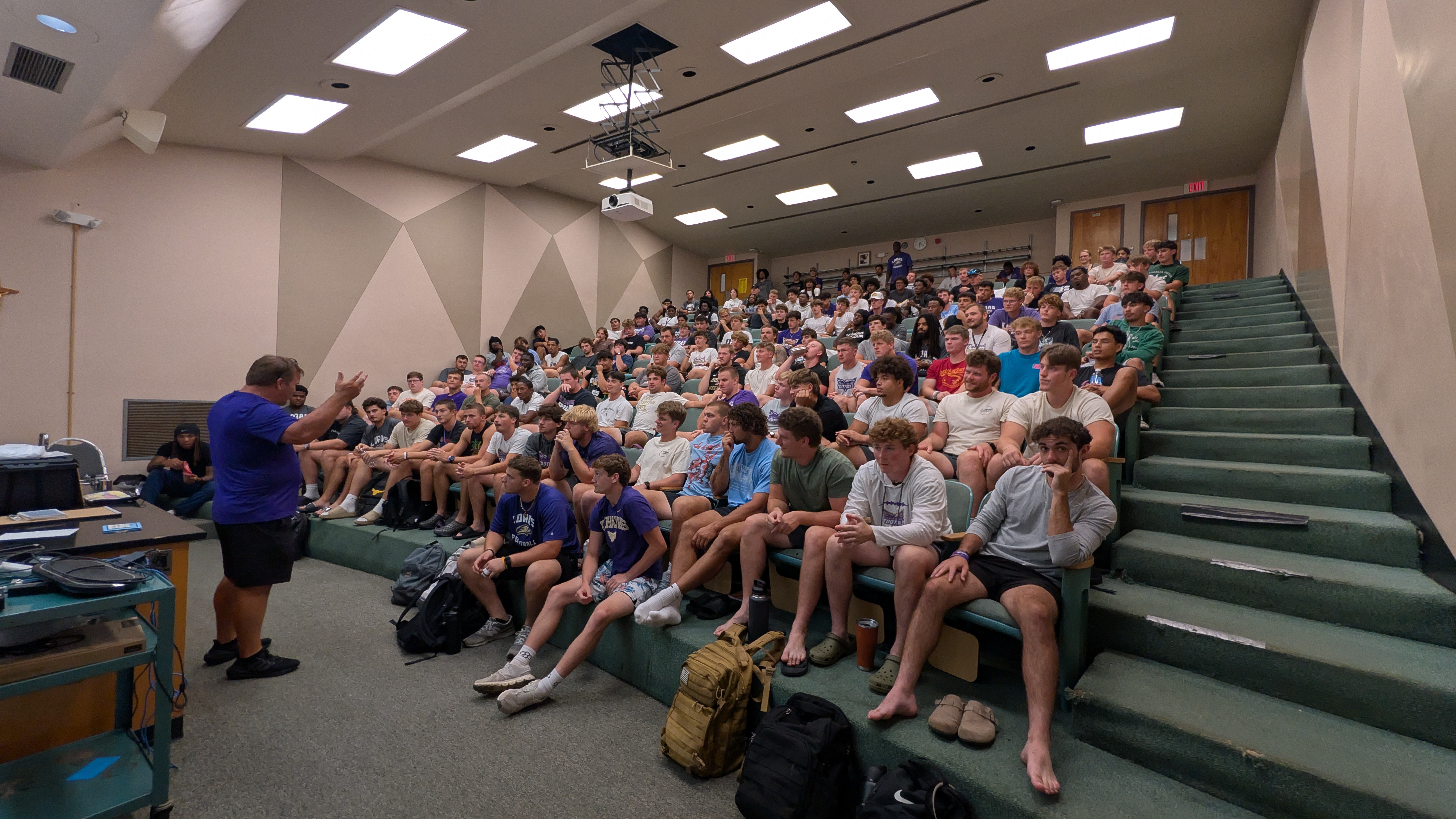
Arms crossed. Phones out. A few guys in the back already deciding this is going to be a waste of an evening they could have spent icing their knees.
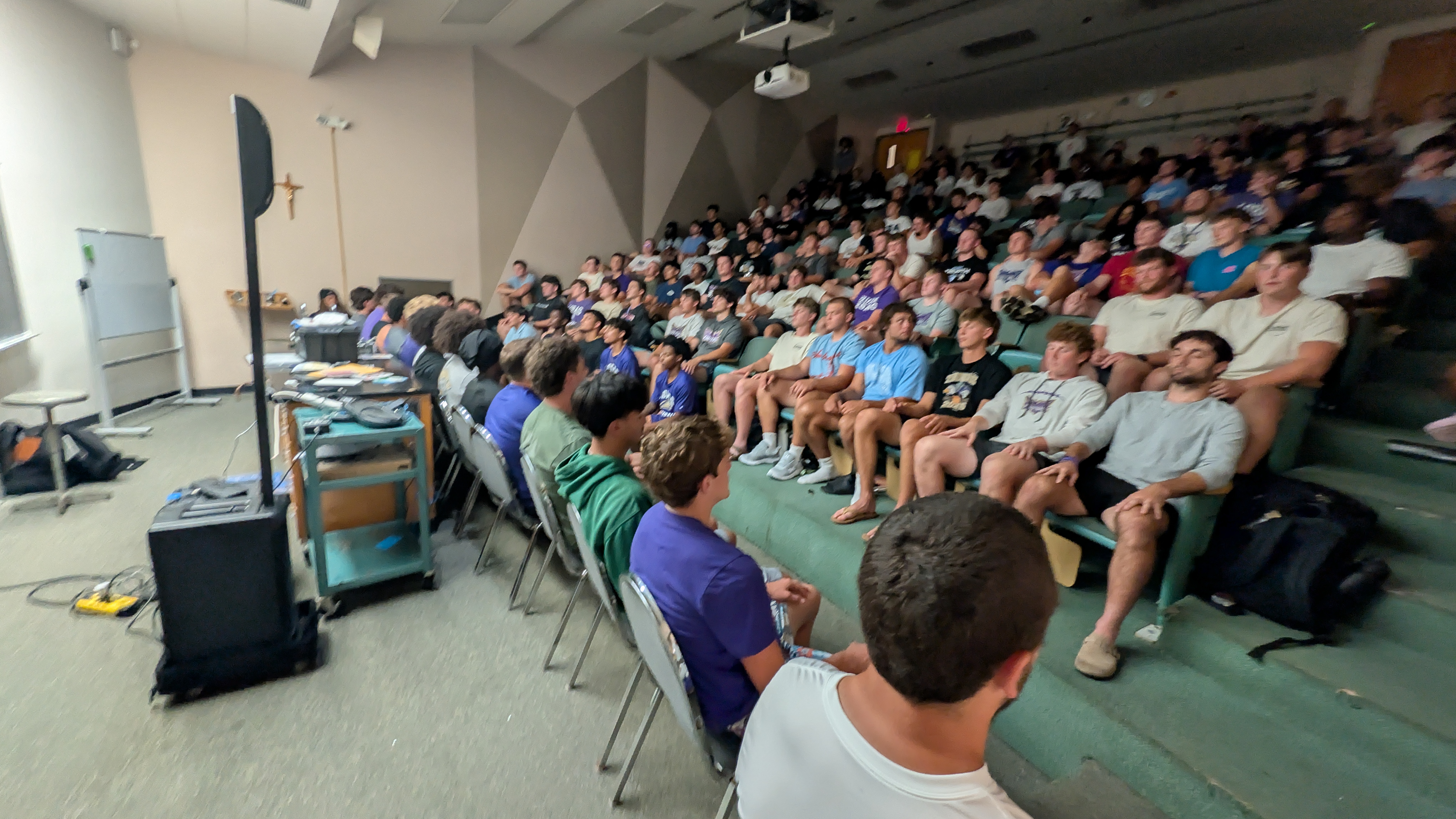
That was the room at Loras College. One hundred thirty-eight players, coaching staff along the walls, and a team bonding night on the schedule that nobody had asked for.
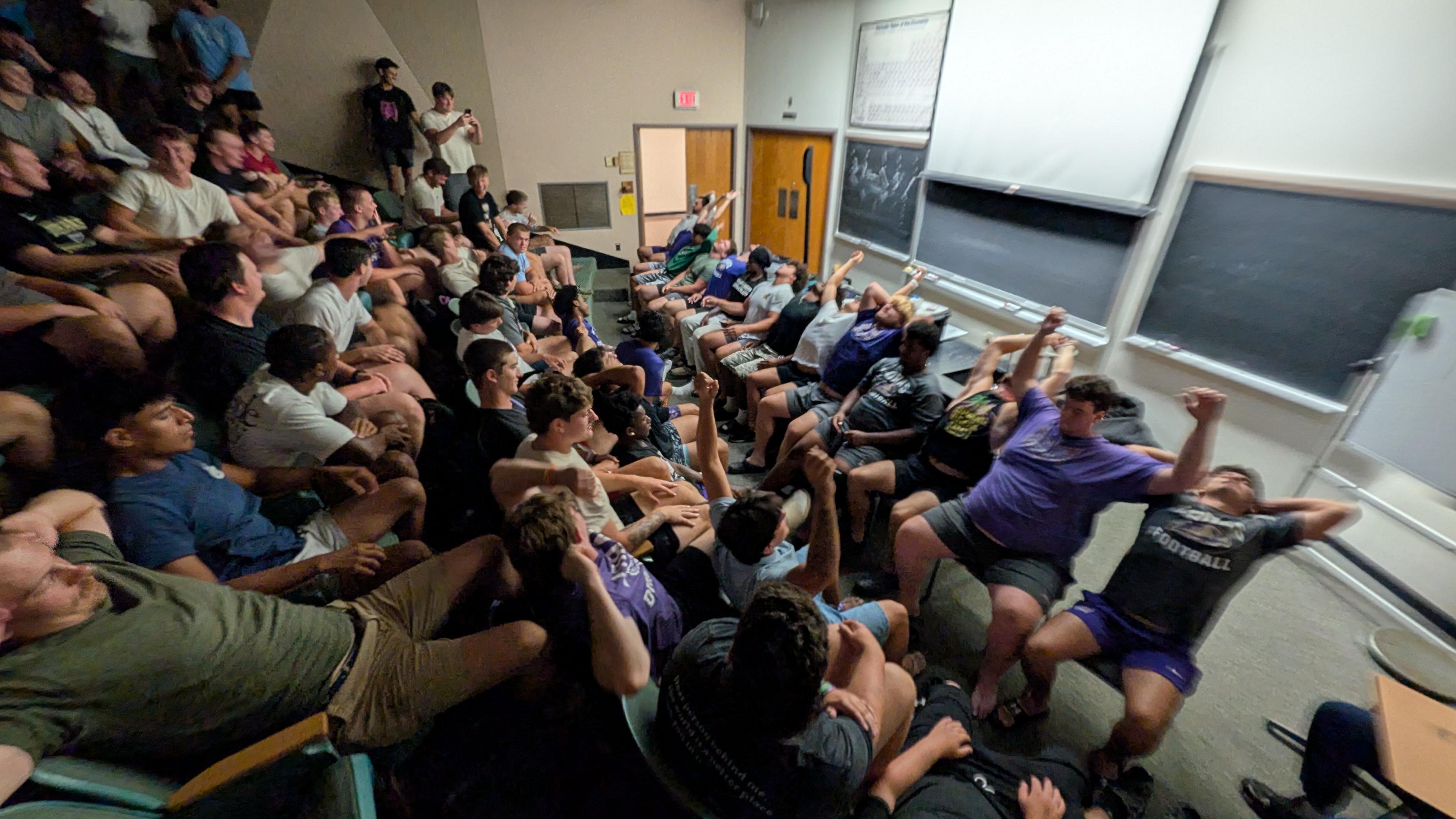
Three hours later, roughly forty of those players were on stage together, and the rest of the room was laughing so hard the coaches had given up trying to keep order.
Here's how the night was built.
I am Randy Andrews, a nationwide comedy hypnotist, comedy mentalist, and keynote speaker delivering clean, high-energy entertainment for corporate events, colleges, and high schools across the country. The Loras College event combined all three formats into a single evening designed around one goal: getting a large athletic roster to connect with each other.
Why athletes are the toughest room — and the best one
Athletes are trained skeptics. They spend their lives being coached, corrected, and told what to believe about their own bodies. They don't hand over trust because someone with a microphone asked nicely.
That's exactly what makes them the right audience.
Once an athlete decides something is real, they commit harder than anyone. The resistance at the front end is what makes the payoff at the back end so big. You just have to earn the turn.
Part one: the message before the show
The evening opened with a keynote segment built directly into the front of the mentalism set — not a separate speech with a stage change, but the first ten minutes of a show that never announced it was starting.
The message was simple: your mind is more powerful than you think, and the direction you point it decides what your body does next.
Every athlete already knows this on some level. You've watched a teammate drop one pass and then drop three more, because after the first one he stopped playing the game and started playing the voice in his head. And you've watched the opposite — a guy who genuinely believes the next play is his, and then it is. Same body, same skill set, two completely different outcomes. The only variable that changed was what he was telling himself.
That's the whole message, delivered in about ten minutes to a room of 138 players who have all lived both versions of it.
The reason to open this way is simple. A team that hears a real message first watches the rest of the night differently. The entertainment stops being a distraction from the season and becomes part of it.
Part two: 30 minutes of mentalism, and the moment the room turned
Then came the comedy mentalism.
For half an hour, the show worked through a series of interactive pieces with players pulled from the room — thoughts identified, choices predicted, details named that nobody had said out loud.
Here's what made it more than a set of tricks. Every piece was proving the point from ten minutes earlier. This is what the mind does when it's locked in and pointed in the right direction. The players weren't just watching something impressive happen. They were watching a demonstration of the exact thing they'd been told about, using volunteers from their own roster.
Somewhere in the middle of that thirty minutes, the arms came uncrossed.
You can watch it happen. A guy who came in determined not to be impressed leans forward. He turns to the player next to him. He says some version of how did he do that. And once one skeptic breaks, the room follows fast, because nobody on a football team wants to be the last one still pretending not to care.
Comedy mentalism works differently than a hypnosis show. Nothing is asked of the audience except attention. That makes it the ideal opening act for a skeptical room — by the time volunteers are needed for the second half, the audience has already decided the performer is worth trusting. The mentalism does the convincing so the hypnosis can do the bonding.
Part three: 40 teammates on stage at the same time
The comedy hypnosis show portion is where a team bonding event stops being a show and starts being the thing the coaching staff actually paid for.
About forty players came up. That is a large group by any standard, and it happened because the first half had already done the work — the room was warm, the skepticism was gone, and getting on stage looked like the fun option instead of the risky one.
What follows is a full comedy hypnosis show. Volunteer-centered, clean, and built so that every player on stage is in on the joke rather than the target of it. The linemen and the quarterbacks and the freshmen who barely knew anybody yet all ended up in the same bit together.
The whole segment ran on positive thoughts and positive actions — the same idea from the opening, now being experienced instead of explained. The volunteers were in a genuinely good headspace by that point in the night, and it showed in how well the show worked on them.
That's the whole point.
One idea, three formats
Here's the structure underneath the entire evening, and it's the part worth stealing.
The team didn't get a lecture and then a show. They got the same message three times.
- •Told. The keynote segment, ten minutes, direct.
- •Proven. Thirty minutes of mentalism demonstrating what a focused mind can do.
- •Experienced. A full hypnosis show where forty of them felt it firsthand.
Hearing an idea once produces a nod. Hearing it, watching it demonstrated, and then living it inside two hours produces something a coaching staff can still reference in November.
A single evening can deliver a keynote message, prove it through comedy mentalism, and let the audience experience it through comedy hypnosis. One idea, three formats, one booking. For athletic departments that need an event to serve a development purpose and not just a social one, this structure is what turns an entertainment line item into a program investment.
What actually happened to the team that night
Team bonding usually means an exercise. A ropes course. A trust fall. A facilitator with a whiteboard asking everyone to share something vulnerable.
Those things work fine. But they're work.
What happened at Loras was different. One hundred thirty-eight guys spent an evening laughing at each other in a way that was completely safe — no hazing, no ranking, no upperclassmen versus freshmen. A senior captain and a walk-on freshman were on stage doing the same silly thing at the same time, and the whole team watched both of them.
Those are the moments that get referenced in the locker room in November.
A comedy hypnosis show works as a team bonding event because it creates shared memories without creating hierarchy. Every volunteer is equal on stage regardless of position, class year, or playing time. The result is a roster full of inside jokes that belong to everyone, built in a single evening, with no facilitation required from the coaching staff.
What athletic directors should know
A few practical notes for anyone considering this format for a team, an athletic department, or a full student-athlete population:
- •Roster size is not a problem. A group of 138 worked well. Larger auditoriums and combined-team events work too.
- •Timing matters more than size. Preseason and early-season dates hit hardest, while the roster is still forming and freshmen are still finding their place. Postseason banquets are the other strong window.
- •The keynote layer is what makes it fundable. Adding a message to the front of the show is the difference between a fun night and a night with a point. A mindset message about self-talk and performance is something an athletic department can justify on a development budget rather than an entertainment one.
- •One night can cover three formats. Keynote, mentalism, and hypnosis in a single booking means one contract, one fee, and one evening on an already-crowded calendar.
Frequently asked questions
Does a comedy hypnosis show actually work for team bonding?
Yes. A comedy hypnosis show creates shared, high-energy memories across an entire roster in one evening. Because volunteers participate as equals regardless of seniority or playing time, the experience builds connection horizontally across a team instead of reinforcing existing hierarchy. At Loras College, roughly forty of 138 football players participated on stage together.
What keynote message works for a college athletic team?
Mindset and self-talk consistently land hardest with athletes because they've already lived both outcomes. The Loras message centered on how much the mind controls physical performance — how one negative thought after a mistake compounds into more mistakes, and how a confident inner state produces the opposite. Athletes recognize it immediately, which is why it works as an opening rather than a lecture.
Will athletes actually volunteer, or will they just sit there?
Athletes volunteer readily once trust is established, which is why the show is structured with comedy mentalism first. The mentalism segment requires nothing from the audience but attention, and it converts skeptics before any volunteer is needed. By the time the hypnosis portion begins, participation is the appealing choice rather than the risky one.
Can a keynote message be combined with an entertainment show?
Yes. Keynote content can be built directly into the opening of a mentalism set so the audience never experiences a transition between "speech" and "show." This format works especially well for athletic teams and student-athlete events, where a department needs the evening to serve a development purpose as well as a social one.
How large of a group can this work for?
Group sizes from a single team of thirty to full auditorium events of several hundred all work. Room setup, sound, and stage size matter more than headcount.
Ready to plan a team bonding night for your program?
Randy Andrews performs comedy hypnosis, comedy mentalism, and keynote speaking for athletic departments, colleges, and universities nationwide.
Check AvailabilityBased in Iowa and performing nationwide across 40+ states, Randy Andrews delivers comedy hypnosis, comedy mentalism, and keynote speaking for corporate events, colleges, high schools, and fundraisers. Find your city or region and see what planners in your market say about the show.


