The Short Answer
High school students engage with anything that treats them as capable people and disengage from anything that treats them as a supervision problem. That is the whole rule, and everything else is a detail underneath it.
They are not harder to reach than previous generations. They are just faster at deciding whether you are worth their attention, and they make that call inside the first ninety seconds.
I am Randy Andrews, a nationwide comedy hypnotist, comedy mentalist, and keynote speaker performing for high schools, colleges, and corporate audiences across the country. After more than 1,500 live shows, a large share of them in gymnasiums, I have had a lot of chances to lose a teenage audience and learn why. Here is what actually holds them.
What Has Genuinely Changed
Some things are different than they were ten years ago, and pretending otherwise wastes your budget.
- Their patience for setup is gone. Not their attention span, their patience. They will watch something for an hour. They will not wait four minutes for it to get going.
- They compare you to their feed. Their baseline for "worth watching" is the best thirty seconds of a thousand creators. That is the standard now.
- They perform for each other constantly. Social risk in front of peers is the dominant consideration in every decision they make in that gym.
- They are fluent in being marketed to. Any message with an agenda gets identified immediately, and the shutters come down.
- They still want to be part of something. This has not changed at all, and it is the opening.
Six Things That Genuinely Engage Teenagers
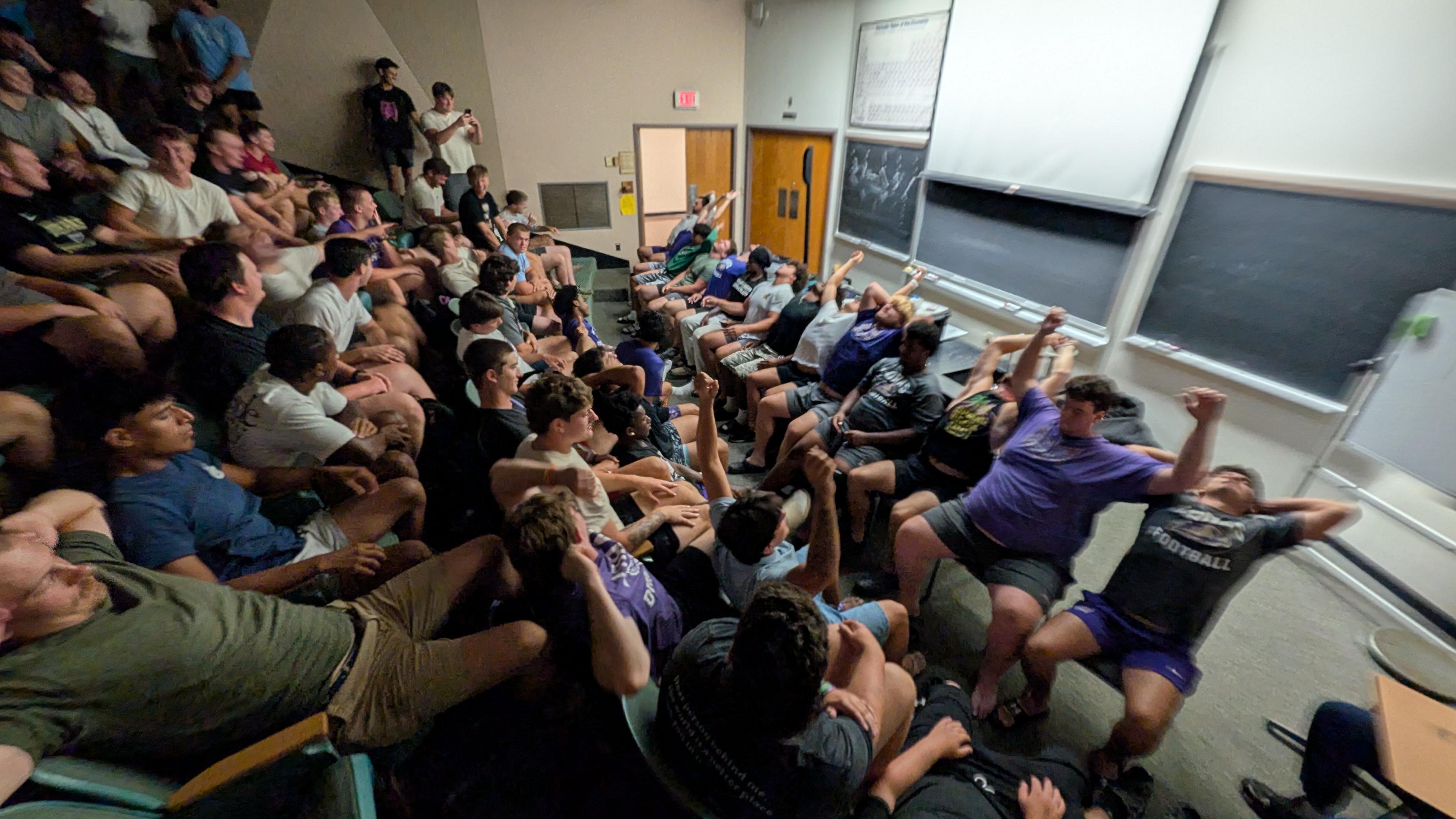
- Their own classmates being the center of it. Nothing beats this. A student on a stage outranks any performer, celebrity, or video you could put in front of them.
- Getting to the point immediately. Open with something happening, not with an introduction of who you are and why you are qualified. Earn the right to be introduced.
- Being genuinely funny rather than youth-funny. Teens can tell when an adult is performing "relatable." Just be actually funny and they will meet you there.
- Real stakes they can see. Something genuinely live, where the room does not know what happens next, including you.
- Something worth filming. If it produces a clip, it produces buzz, and buzz produces attendance at your next event.
- Respect delivered without announcement. Do not tell them you respect them. Talk to them the way you would talk to adults and let them notice.
That last one carries more weight than the other five combined. Almost every failed school assembly I have ever seen failed on tone rather than content.
High school students engage with programming that treats them as capable participants rather than as an audience to be managed. The most reliable engagement mechanism is featuring students themselves, since peer visibility outranks any external performer. Programs lose teenage audiences most often through condescending tone rather than through weak content. Randy Andrews performs for high school audiences nationwide.
The Authenticity Test
Every teenage audience runs the same test on you in the first ninety seconds. They are not deciding whether you are good. They are deciding whether you are being real with them.
Things that fail the test instantly:
- Using slang that is either dated or clearly rehearsed
- Referencing a platform or trend incorrectly
- Opening with "I know you all would rather be somewhere else"
- Any sentence that begins with "kids these days"
- Pretending to be their age instead of being comfortable being an adult
Things that pass:
- Getting a real laugh in the first sixty seconds
- Being visibly comfortable when something goes sideways
- Treating a student volunteer exactly as respectfully as you would treat a CEO
- Admitting you do not know something rather than bluffing
What Does Not Work Anymore
This is not a criticism of anyone doing this work, because a lot of it used to work fine.
The lecture assembly is done. So is the video-heavy presentation, the celebrity speaker they have never heard of, and the program where students sit in bleachers for fifty minutes receiving a message.
None of those fail because the content is bad. They fail because the format asks teenagers to be passive for an extended period in a room where their peers are watching them be bored, which is socially the worst possible position for them.
The Assembly Format Problem
If you are an activities director, this section may be worth more to you than the rest of the post.
Gymnasiums fight every performer who walks into them:
- Acoustics are brutal. Sound bounces and intelligibility drops. A house PA meant for announcements is not adequate for a program.
- Bleachers create distance. The back rows are socially and physically far away, and they will start their own event if you let them.
- Lighting is flat and uniform. Nothing directs attention, so attention goes wherever it wants.
- Grade groupings cluster. Seniors together, freshmen together, and each group is performing for the others.
Fixes that cost nothing: bring students down onto the floor instead of using the full bleachers, close the top rows entirely, and put the performer close enough to make eye contact with the back of the seated group.
Gymnasium assemblies present specific engagement obstacles including poor acoustics, physical distance created by bleachers, uniform lighting, and grade-level clustering. Seating students on the gym floor rather than in full bleachers, closing upper rows, and reducing the distance between performer and audience improve engagement without additional cost.
Making Participation Socially Safe
Here is something adults consistently underestimate. When a teenager decides whether to volunteer, they are not weighing the activity. They are weighing what happens in the hallway on Monday.
So the job of anyone running a participation program is to make certain that Monday goes well for whoever stands up.
How I handle that:
- Volunteers are always self-selected, never called out by name or pushed forward by friends.
- Any student can return to their seat at any moment with no attention drawn to them.
- Every routine is written so the room laughs with the student, never at them.
- Nothing romantic, physical, or personal is ever part of a high school show.
- No student is ever the subject of a joke about their appearance, ability, or social standing.
When you get that right, the students who volunteer become the most popular kids in the building for about two weeks. When you get it wrong, nobody at that school ever volunteers for anything again. The full standards are on my FAQ and safety page.
Frequently Asked Questions
How do you engage high school students at an assembly?
Start with something happening rather than an introduction, feature students themselves as early as possible, and speak to them the way you would speak to adults. Teenage audiences decide within about ninety seconds whether a program is worth their attention, and tone matters more than content in that window.
What are good high school assembly ideas?
Interactive programs that feature student volunteers consistently outperform lectures, videos, and presentations. Comedy hypnosis, interactive comedy, and participation-based programs work because they give students peer visibility and produce content worth sharing afterward.
Why do school assemblies lose student attention?
Most often because the format requires extended passive listening in a room where students are visible to their peers. Being visibly bored is socially safer than being visibly engaged, so a passive format pushes students toward disengagement regardless of content quality.
Are teen attention spans really shorter now?
Not in the way people usually mean. Teenagers will watch something they find worthwhile for an hour or more. What has shortened is patience during the opening, since they are accustomed to deciding quickly whether something merits their time.
How do you get students to volunteer without pressuring them?
Make participation genuinely optional, earn some laughs before asking for anything, and protect the first volunteer completely so the rest of the room sees what happens. Students volunteer readily when they trust that standing up will go well socially.
What formats work for a school that cannot do a full hypnosis show?
A comedy mentalism program works in almost any space, since it needs no chairs, no volunteer row, and minimal setup. It fits assembly windows, leadership conferences, and events where a full stage is unavailable.
Bring Something Your Students Will Talk About
Schools that book this well end up with two weeks of hallway conversation and a student body that shows up for the next thing you schedule. That compounding effect is the real return on a school assembly budget. Program details are on my high school entertainment page, and schools describe the response on my reviews and past clients page.
Check AvailabilityBased in Iowa and performing nationwide across 40+ states, Randy Andrews delivers comedy hypnosis, comedy mentalism, and keynote speaking for corporate events, colleges, high schools, and fundraisers. Find your city or region and see what planners in your market say about the show.