The Short Answer
Welcome week attendance is decided by what students hear from other students in the first 48 hours, not by your marketing. Your posters, emails, and app notifications are the setup. Word of mouth is the actual sale.
So book one anchor event that produces immediate conversation and schedule it early enough that the buzz carries the rest of your week.
I am Randy Andrews, a nationwide comedy hypnotist, comedy mentalist, and keynote speaker performing for colleges and universities, corporate events, and high schools across the country. Across more than 1,500 live shows I have played a lot of welcome weeks, including the packed ones and the ones where the activities board did everything right and 60 students showed up. Here is what separates them.
The Welcome Week Attendance Problem
First-year students arrive with no social network and no reason to trust that any given event is worth leaving their room for.
That creates a specific dynamic. Students do not attend events. Students attend events their new friends are attending. And in week one, they do not have new friends yet.
This is why night one and night two are structurally harder than night four, and why so many boards front-load their best programming into exactly the wrong slot.
Which Night Actually Matters
| Slot | What Works Here | What to Avoid |
|---|---|---|
| Move-in day / night | Food, low-commitment drop-in events | Anything requiring a full auditorium |
| Night 1 | Hall-based and floor-based programming | Your headline act, nobody knows anyone yet |
| Night 2 | THE ANCHOR EVENT. Peak attendance window. | Competing simultaneous programming |
| Night 3 | Interest-based and org fair follow-ups | A second headline act, energy splits |
| Weekend | Off-campus trips, larger social events | Anything that assumes everyone stayed |
| Week 2 | Late-night programming, second big event | Assuming week one momentum carries itself |
The pattern to hold onto: night two, not night one. Students need one day to make the first connection, then they will bring that person to something.
Six Formats That Reliably Fill a Room
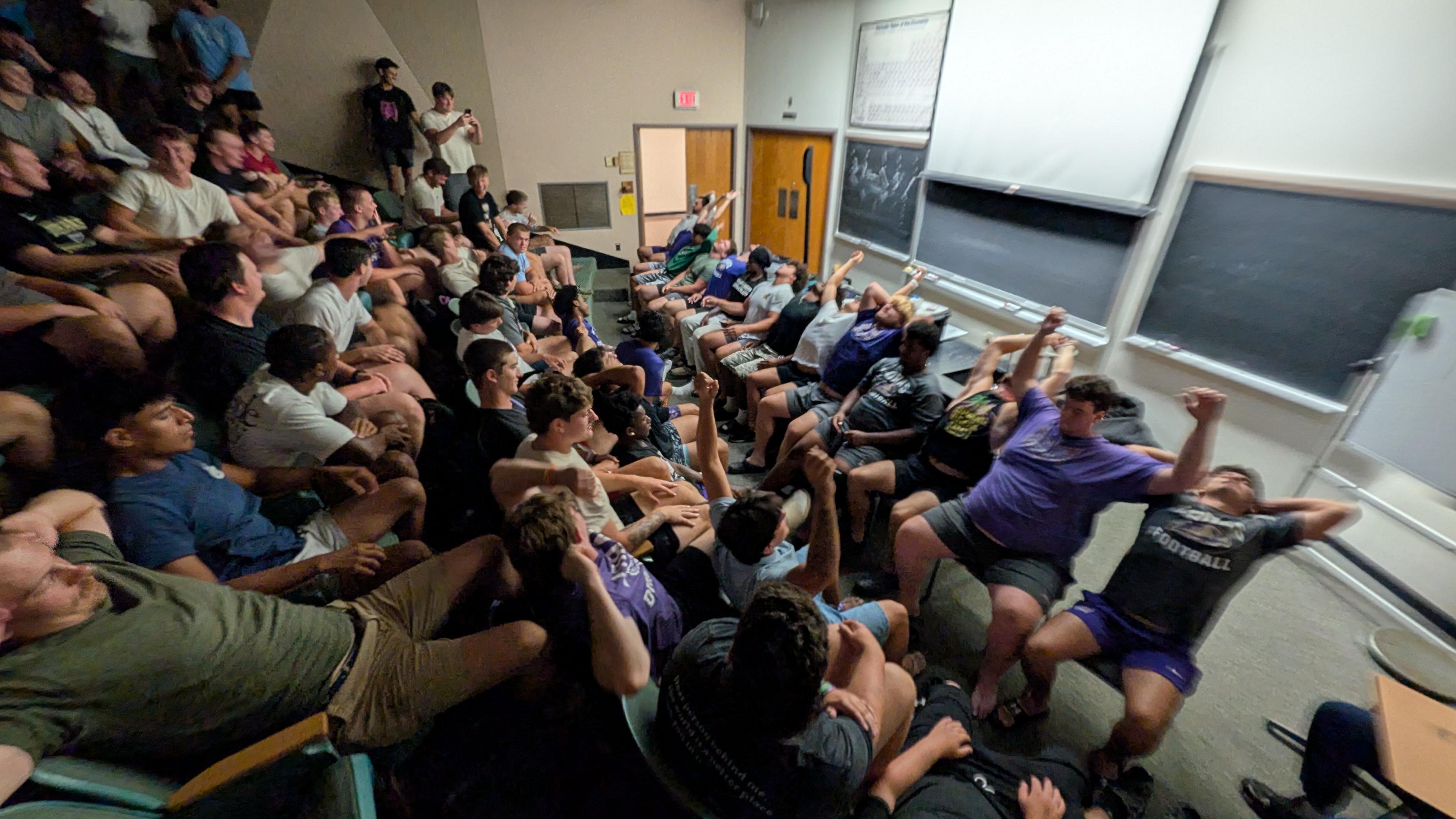
- Comedy hypnosis. The most reliable anchor in campus programming, because students come to see classmates on stage rather than a performer they have never heard of.
- Comedy mentalism. Works where hypnosis will not fit, needs no chairs or full stage, and plays extremely well to a college audience.
- Late-night food plus a show. Combine them. Food gets them through the door, the show keeps them in the room.
- Anything with a prize students actually want. Textbook credit, parking passes, cash. Not branded merchandise.
- Student-performer showcases. Free, high attendance, and builds your org pipeline for the year.
- Outdoor screening with real production value. Works when the weather cooperates and the sound system is genuinely good.
Notice that four of the six put students at the center. That is not a coincidence, it is the mechanism.
College welcome week attendance is driven primarily by peer word of mouth rather than institutional marketing. Because first-year students attend events their new friends attend, the highest-attendance slot is typically the second night rather than the first. Programming that features students themselves generates the fastest conversation. Randy Andrews performs welcome week programming for universities nationwide.
How to Market to Students Who Ignore Marketing
Every campus is running the same playbook: posters, table tents, the app, an Instagram post, an email nobody opens. Here is what actually moves the number.
- RAs are your entire distribution channel. One RA who is genuinely excited outperforms every poster on campus. Brief them personally and give them something to be excited about.
- Show last year's footage, not a promo reel. Students want to see the room full of people who look like them, not a professional trailer.
- Name the students, not the performer. "Watch your floor mates get hypnotized" beats any performer bio.
- Post during the event, not before it. A story of a packed room at 8:15 pulls in the students who were undecided at 8:00.
- Give orientation leaders a script. Not a flyer. One sentence they say out loud, repeatedly, to every group.
That last one is the cheapest attendance lever in higher education and almost nobody uses it deliberately.
The Booking Timeline for Activity Boards
Campus programming runs on a calendar that fights you, so here is the honest schedule:
- Spring semester, February to April: book fall welcome week. Yes, that early. The strongest dates go first.
- April to May: contracts and purchase orders through your student activities business office, which takes longer than anyone expects.
- June to July: confirm technical requirements, room reservations, and campus AV.
- Two weeks out: brief RAs and orientation leaders, and finalize the promotion plan.
- Week of: confirm room setup, sound check time, and who your on-site contact will be.
If your board is deciding in July for an August event, contact performers immediately rather than assuming availability. Late August is the single most contested week in campus entertainment.
Budget Realities for Activity Boards
I work with a lot of boards operating on student fee allocations, and I would rather be useful than vague.
- Concentrate rather than spread. One strong anchor beats four average events, both for attendance and for how your board gets remembered at allocation time.
- Ask about routing. If I am already performing in your region that week, travel costs change. Always ask.
- Co-sponsor across departments. Residence Life, Greek Life, and Student Government often have separate lines that can combine for one bigger event.
- Weeknight and shoulder dates cost less. If your date is flexible, say so up front.
- Ask what is included. Promotional assets, photos, and social content should come with the booking rather than as extras.
I do not publish flat rates because campus budgets vary enormously. Tell me your date, your expected headcount, and your number, and I will tell you straight whether it works.
Campus activity boards should book fall welcome week programming between February and April of the preceding spring semester, since the last two weeks of August are the most contested dates in campus entertainment. Concentrating budget into one anchor event typically produces higher total attendance than distributing it across several smaller programs.
Frequently Asked Questions
What are the best college welcome week event ideas?
Programs featuring students themselves generate the most attendance, since first-year students come to see classmates rather than an unfamiliar performer. Comedy hypnosis, comedy mentalism, late-night food events paired with a show, and student showcases all work reliably. Interactive formats outperform passive ones consistently.
Which night of welcome week gets the highest attendance?
The second night is generally strongest. Night one is structurally difficult because students have not formed connections yet and rarely attend alone, while by night two most students have found at least one person to go with.
How far in advance should a campus activities board book entertainment?
Book fall welcome week in February through April of the previous spring semester. The final two weeks of August are the most contested dates in campus entertainment, and contracting through a student activities business office takes longer than most boards anticipate.
How do you get students to actually attend campus events?
Brief resident assistants and orientation leaders personally and give them one sentence to repeat, since peer recommendation outperforms every other channel. Show real footage from previous events rather than promotional material, and post during the event to capture undecided students.
What is a good headcount for a welcome week anchor event?
It depends on your institution size, but the useful target is filling your chosen room rather than hitting a number. A full 400-seat auditorium creates far more campus conversation than a half-empty 900-seat one, so choose the room conservatively.
Can one performer cover multiple campus events?
Yes, and it is usually more efficient. Boards frequently pair a welcome week show with a leadership program, a Greek Life event, or a late-night event later in the semester within one travel booking. Details are on the FAQ page.
Let Us Look at Your August Calendar
The boards that get this right end up with a packed room, a week of campus conversation, and a much easier allocation conversation next spring. Campus programs are covered on my colleges and universities page, the show format is on the comedy hypnosis show page, and student life teams describe the results on my reviews and past clients page.
Check AvailabilityBased in Iowa and performing nationwide across 40+ states, Randy Andrews delivers comedy hypnosis, comedy mentalism, and keynote speaking for corporate events, colleges, high schools, and fundraisers. Find your city or region and see what planners in your market say about the show.