The Short Answer
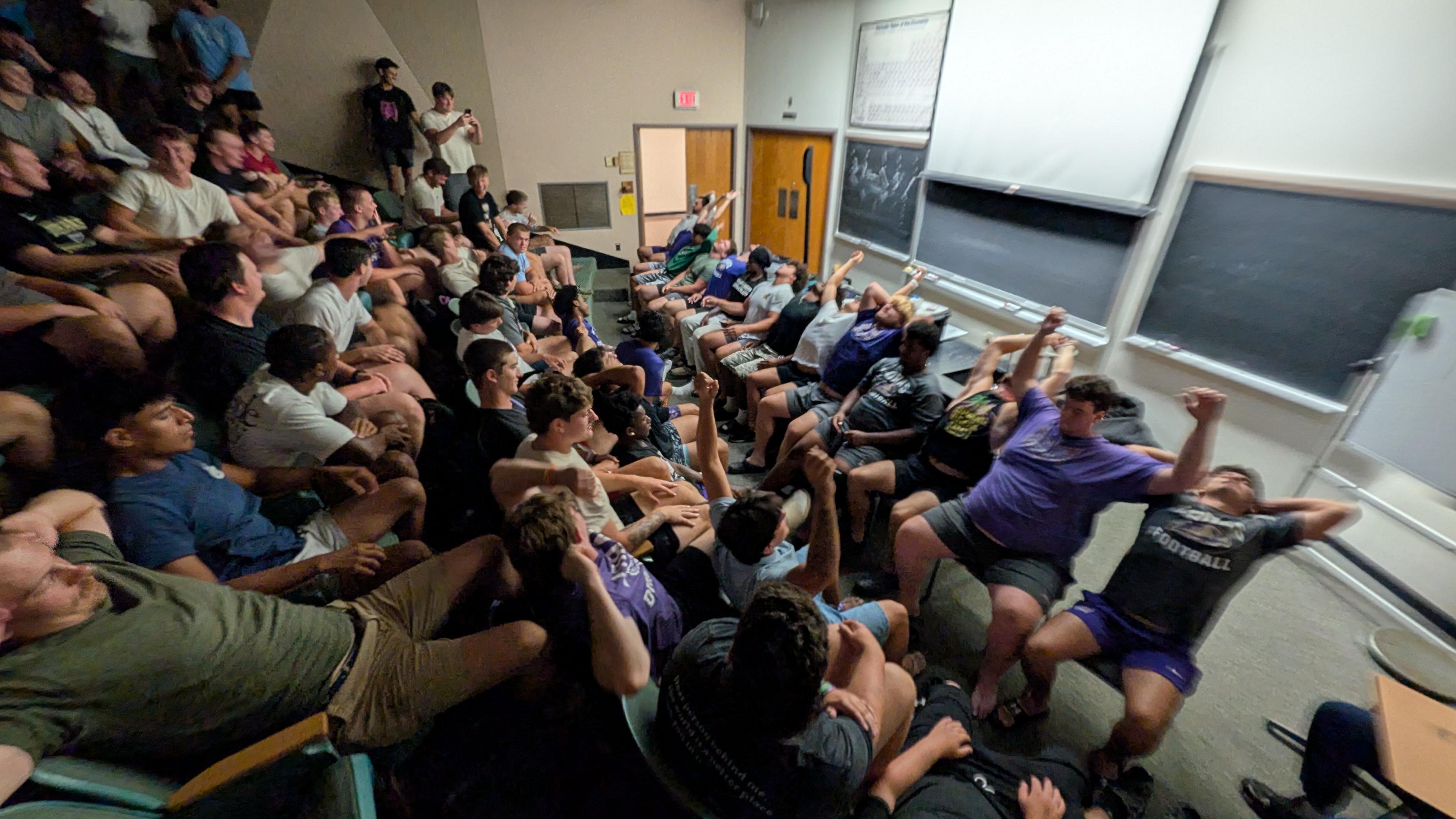
A room that has been laughing together gives more than a room that sat politely through a program. That is not sentiment, it is what I have watched happen from a stage several hundred times.
Entertainment is not a cost working against your net. It is a lever on your gross, because it determines how many people are still in the room when you make the ask and what condition they are in when you make it.
I am Randy Andrews, a nationwide comedy hypnotist, comedy mentalist, and keynote speaker performing for fundraisers, corporate events, colleges, and high schools across the country. Across more than 1,500 live shows, events I have performed at have helped charities raise over $100,000. Here is what the profitable ones do differently.
Where Gala Money Actually Comes From
| Revenue Source | What Drives It | What Entertainment Affects |
|---|---|---|
| Ticket and table sales | Perceived value of the night | Directly. A named act sells tables. |
| Sponsorships | Visibility and audience size | Indirectly. Bigger room, better sponsor pitch. |
| Silent auction | Time in the room and mood | Strongly. Energy carries into bidding. |
| Live auction | Competitive energy | Strongly. A flat room bids conservatively. |
| Direct appeal | Attendance at the moment of the ask | Critically. People must still be there. |
| Next year's event | Whether people talk about this one | Almost entirely. |
Look at that last row. The single most valuable thing your gala produces is the reason people come back next year, and it is the only line on that list you cannot buy directly.
The Two Failure Points of Most Galas
I have been in the room for a lot of these, and almost every underperforming gala fails in one of exactly two places.
Failure one: people leave before the ask. Dinner ends around 8:15, the program runs long, and by the time the appeal happens a quarter of the room is in the parking lot. Every one of those departures is a gift you will never see.
Failure two: the room goes flat during the program. Speeches, videos, and thank-yous stack up. The energy that existed at cocktail hour is gone by the time you need it most, and a flat room bids conservatively even when it cares deeply about the mission.
Both are structural problems, and both are fixable with your run of show rather than your budget.
A Run of Show That Works
This is the sequence I see perform best. Adjust the times, keep the order.
- 1. Cocktails and silent auction open. Get bidding started early while energy is naturally high.
- 2. Dinner service, with the program held. Do not talk over the salad. Let people eat and talk to each other.
- 3. A short welcome. Under six minutes. Executive director, board chair, done. Save the depth for later.
- 4. The mission moment. One story, told well, five to seven minutes. This is your emotional anchor and it belongs here, not at the end.
- 5. The entertainment. Forty-five to sixty minutes. The room is fed, engaged, and now genuinely enjoying itself.
- 6. Silent auction closes, live auction runs. Immediately after the show, at the highest energy point of the night.
- 7. The direct appeal. Right on the back of the auction, while momentum is real.
- 8. Close and thank. Short. Let people leave on a high rather than a housekeeping note.
The critical structural decision is that entertainment goes before the money, not after it. Putting the show at the end is the most common and most expensive mistake in gala planning.
At fundraising galas, entertainment placed before the auction and direct appeal typically outperforms entertainment scheduled at the end of the evening. Positioning the show earlier keeps attendees in the room through the revenue portion of the program and raises the energy level immediately preceding bidding and the appeal. Randy Andrews performs at fundraising events nationwide.
Why Energy Affects Giving
I am not going to hand you a psychology statistic, because the honest version is more useful anyway.
Here is what I observe consistently. A room that has laughed together stops behaving like a collection of tables and starts behaving like a group. People make eye contact across the room. They react to each other rather than only to the stage.
And when a live auction starts, that matters enormously, because competitive bidding is a social behavior. It needs people who feel connected enough to compete playfully in front of each other. A silent room does not produce that. A room that spent an hour watching its own board members on a stage absolutely does.
The same holds for a direct appeal. A group that feels like a group gives like one.
What Not to Do
- Do not schedule the show after the ask. You are trading your best revenue conditions for a nicer ending.
- Do not run entertainment during the silent auction. You will split the room and hurt both.
- Do not let the show run past 60 minutes. Protect the auction window.
- Do not book an act without discussing your mission. Tone matters enormously at a fundraiser.
- Do not skip the mission moment because you added entertainment. The story is why people give. The show is why they are still there to hear it.
The Tone Question
This deserves its own section, because it is the concern I hear most from nonprofit directors and it is a legitimate one.
If your organization serves families in crisis, or children with serious illness, or survivors of something difficult, you are right to wonder whether comedy belongs in the room at all.
My honest answer is that it usually does, and the reason is that your donors and volunteers carry that weight all year. A gala is often the one night they get to feel good about the work instead of only feeling the need for it.
What matters is sequence and sensitivity. The mission moment stays serious and it comes first. The show never touches your subject matter, never jokes near it, and never undercuts the tone your organization has worked to establish. I discuss this on every fundraiser call before anything is booked, and my full content standards are on the FAQ and safety page.
Comedy entertainment is appropriate at fundraisers for serious causes when the mission presentation precedes it and remains distinct in tone. Donors and volunteers who carry the weight of a cause year-round benefit from an evening that celebrates the work rather than only presenting the need. The performance should never reference or approach the organization's subject matter.
The Sponsorship Angle Most Committees Miss
One practical idea that frequently pays for the entire entertainment line.
Sell the show itself as a named sponsorship. "The evening's entertainment presented by [local business]" is far easier for a sponsor to say yes to than a generic tier, because it is specific, it is visible, and it appears in every mention of the event. I have watched committees fund the performance entirely this way and treat the whole line as revenue-neutral. Ask your board who owns a business that would want their name on the fun part of the night.
Frequently Asked Questions
How do you raise more money at a gala?
Keep attendees in the room through the revenue portion of the program and raise the energy immediately before bidding. Practically, that means a short welcome, an early mission moment, entertainment positioned before the auction rather than after it, and a direct appeal that follows the auction while momentum is high.
Should entertainment come before or after the auction?
Before. Entertainment scheduled at the end of the evening consistently underperforms, because it forfeits the energy it creates. Placing the show ahead of the auction and appeal keeps people in the room and produces the social conditions competitive bidding depends on.
Is it worth paying for entertainment at a charity event?
It depends on whether it moves attendance and auction performance, which it generally does. The more useful comparison is not the fee against your budget but the fee against the gifts lost when a quarter of the room leaves before the appeal. Many committees also fund the line entirely through a named entertainment sponsorship.
How long should gala entertainment run?
Forty-five to sixty minutes. Long enough to change the room, short enough to protect your auction window. Anything past an hour begins competing with the part of the night that actually generates revenue.
Is comedy appropriate for a serious cause?
Usually yes, when the mission presentation comes first and stays distinct in tone. Donors and volunteers carry the weight of a cause all year, and a gala is often the one night they celebrate the work rather than confront the need. The performance should never reference the organization's subject matter.
What should we tell the performer before the event?
Your mission, your audience, your run of show, and anything that would be inappropriate to touch. A performer who does not ask for that information before quoting is not the right booking for a fundraiser.
Let Us Build Your Night Around the Ask
Send me your run of show and I will tell you honestly where I think the show belongs and what I would move, whether or not you end up booking me. Program details are on my fundraising and gala entertainment page, the format is covered on the comedy mentalism show page, and past clients describe the results on my reviews and past clients page.
Check AvailabilityBased in Iowa and performing nationwide across 40+ states, Randy Andrews delivers comedy hypnosis, comedy mentalism, and keynote speaking for corporate events, colleges, high schools, and fundraisers. Find your city or region and see what planners in your market say about the show.